Booking / Practical guide
Custom booking systems: a practical planning guide
Define resources, availability, states, integrations and operating responsibilities before commissioning a booking platform.
What is a booking engine?
A booking engine is software that manages availability, scheduling and reservations between customers and a business. It applies rules about time, capacity and resources, then records an appointment or reservation. The interface is only one part of that system.
Do you need custom booking software?
Consider custom software when your resource model, customer journey or operational integration cannot be represented cleanly in an existing tool. A straightforward calendar with standard appointment rules may be better served by a ready-made product. Write down the specific constraint before committing to a custom build.
Compare the total responsibility as well as the feature list: configuration, integration, migration, hosting, maintenance and the staff time needed to operate it.
Define the resource before designing the calendar
A resource may be a staff member, treatment room, court or table. Some services consume more than one resource. Duration, setup time, recovery buffers and working hours determine when it is available.
Use an example appointment to test the model. If a treatment needs an artist for sixty minutes and a room for ninety, a single generic start/end field may not capture the real constraint.
- Which resources does each service consume?
- Can a resource serve more than one booking at a time?
- Which hours, time zones and closure rules apply?
- Who can override availability, and how is that recorded?
Agree the state model
Requested, held and confirmed should have explicit meanings. A temporary hold needs an expiry rule. A cancellation needs a release rule. A reschedule should not lose the original appointment if the new slot cannot be committed.
| State | Customer meaning | Operational question |
|---|---|---|
| Requested | The business is reviewing the request | Who owns the response? |
| Held | Capacity is temporarily reserved | When does the hold expire? |
| Confirmed | The booking is accepted | Which resources are committed? |
| Cancelled | The booking will not proceed | Are capacity and payment consequences reconciled? |
How do you prevent double booking?
Recheck availability when saving the booking and enforce the resource constraint in the authoritative data store. Two customers can view the same free time before either confirms. The backend must decide which commit succeeds and give the other customer a useful recovery path.
This is a concurrency problem, not just a calendar styling issue. The supporting engineering note explains the conflict and a conceptual test scenario.
Scope communication and payments separately
A reminder is not the same transaction as a booking commit. If a message fails, the appointment should retain its correct state and staff should have a way to retry communication. Payment status should be distinct from booking status, with explicit handling for deposits, failed payments and refunds.
For WhatsApp, first distinguish a public click-to-chat link from provider-based automated messaging. The latter requires account setup, approved message patterns where applicable and a defined consent workflow.
How much does a custom booking system cost?
A defensible quote follows a scope model rather than a universal number. List the resource rules, user roles, journeys, payment requirements, integrations, data migration and launch support. A small appointment workflow and a multi-location platform do not have comparable scopes.
| Scope area | Question that changes the work |
|---|---|
| Availability | One resource or several dependent resources? |
| Roles | Staff editing only, or manager approvals and overrides? |
| Integrations | Links and embeds, or bidirectional synchronization? |
| Migration | Clean records, or duplicate and incomplete data? |
| Operation | Who monitors failures and supports users? |
What should you test before launch?
Run a complete booking, a conflicting booking, a cancellation, a reschedule and a notification failure. Check staff and customer views after each action. Confirm operating hours, language variants and the handoff when support is needed.
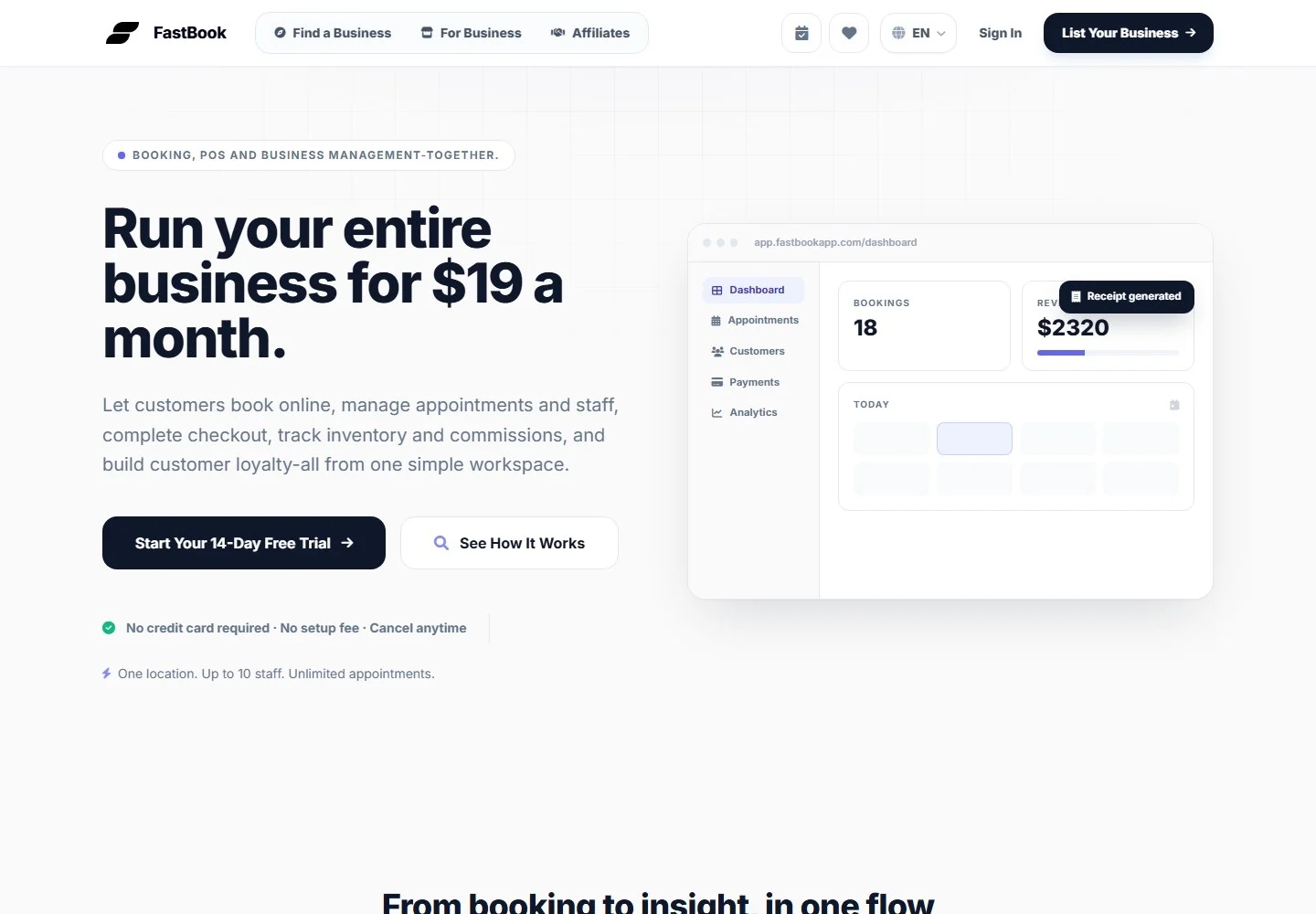
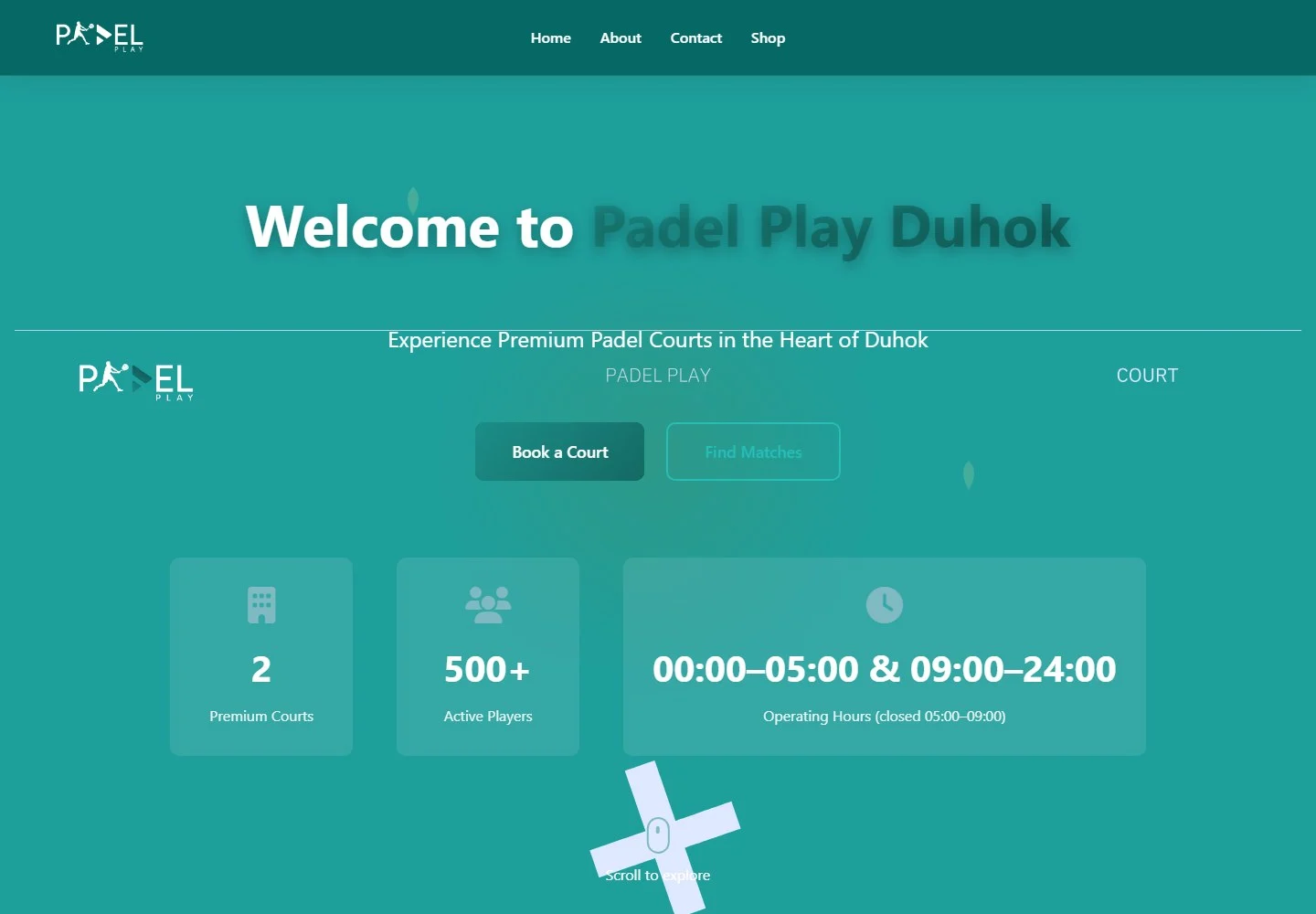
Use our booking requirements planner to produce a starting brief. FastBook and Padel Play Duhok provide relevant public project examples; their screenshots should not be treated as a specification for your own operational rules.