Business Systems / Practical guide
The URVEON Digital Stack: connect experience to operations
A four-layer planning model for connecting the experience customers see with the systems a business runs on.
What is the URVEON Digital Stack?
The URVEON Digital Stack is our planning model for a digital business: experience, transaction, operations and intelligence. It helps a project team trace a customer action through the systems and people that must respond. It is a design framework, not a certification or a claim that every business needs a custom platform.
Layer 01: experience
This is what the customer encounters: a website, a product interface, service information, motion, imagery and navigation. Its job is to make the offer understandable and the next action usable. A stronger experience does not automatically fix the workflow behind it.
For a salon, this layer includes the treatment menu, artist profiles and the booking interface. For a property company, it includes developments, listings and viewing information.
Layer 02: transaction
A transaction is the commitment the interface creates: an enquiry, a reservation, an order or an account request. Define the required information, validation rules and the exact confirmation the customer receives. A request awaiting review should never be presented as an accepted booking.
The most useful question at this layer is: what is now true in the business system that was not true before the customer acted? If the answer is only “an email was sent,” decide whether that is sufficient for the operating model.
Layer 03: operations
Operations turns the commitment into work. It includes staff permissions, assignment, calendars, stock, fulfilment, payment reconciliation and reporting. Every important record needs an owner. Every queue needs a next action.
This is the back office in our front/back framework. The customer may never see it, but its state should remain consistent with the promises made by the front office.
Layer 04: intelligence
Intelligence helps the organization understand or improve the workflow. It can mean ordinary reporting, rule-based automation or model assistance. It should use trustworthy records from the other layers rather than conceal gaps in the underlying process.
For example, a booking report can show cancellations by service. A rule can notify a manager when a request waits too long. A model can draft a reply for review. None requires granting a model unrestricted authority over business records.
Use the model on one real journey
Write down one customer action, its resulting record, the staff action it creates and the information needed to evaluate the outcome. Mark every handoff between tools. This exposes unclear ownership before interface production begins.
| Layer | Booking example | Acceptance question |
|---|---|---|
| Experience | Choose service, artist and time | Can a customer complete the journey on mobile? |
| Transaction | Confirm an available slot | Is availability rechecked before commit? |
| Operations | Staff calendar and changes | Can staff recover from a cancellation? |
| Intelligence | Cancellation reporting | Does the report use agreed status definitions? |
What this framework can and cannot prove
This is an original planning model, not a performance benchmark. We use it to make scope and responsibilities explicit. A diagram does not prove that a project has a particular backend or that a business achieved a numerical result. Those claims need implementation evidence and measured data.
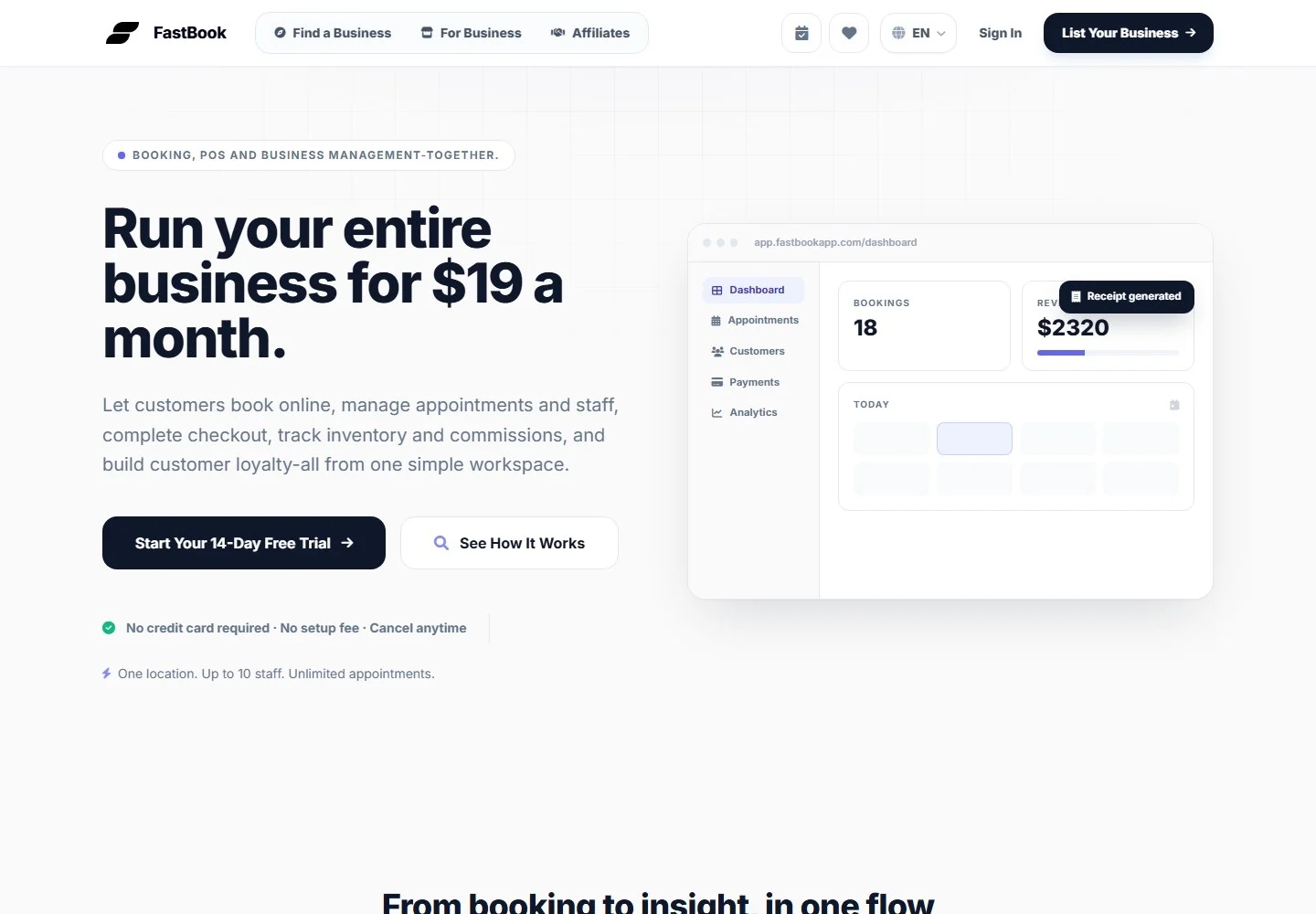
FastBook is a relevant portfolio reference because its published feature set spans booking, customers, checkout and inventory. Individual client implementations should still be assessed against their own confirmed requirements.